
A new use for industrial land
The proposal brings private investment into the former Unilever site, supporting site clean-up and a return to productive use as part of Warrington’s industrial regeneration.


BANK QUAY / WARRINGTON
Bringing a former industrial site back into use, with AI infrastructure, skilled work and a long-term role in the local economy. Here is what we are proposing—and what it could mean for our neighbours.
THE PROPOSAL
A data centre is a purpose-built home for computers, with the power, cooling, connections and support they need to work reliably. Those computers process and store information used by businesses, researchers and digital services.
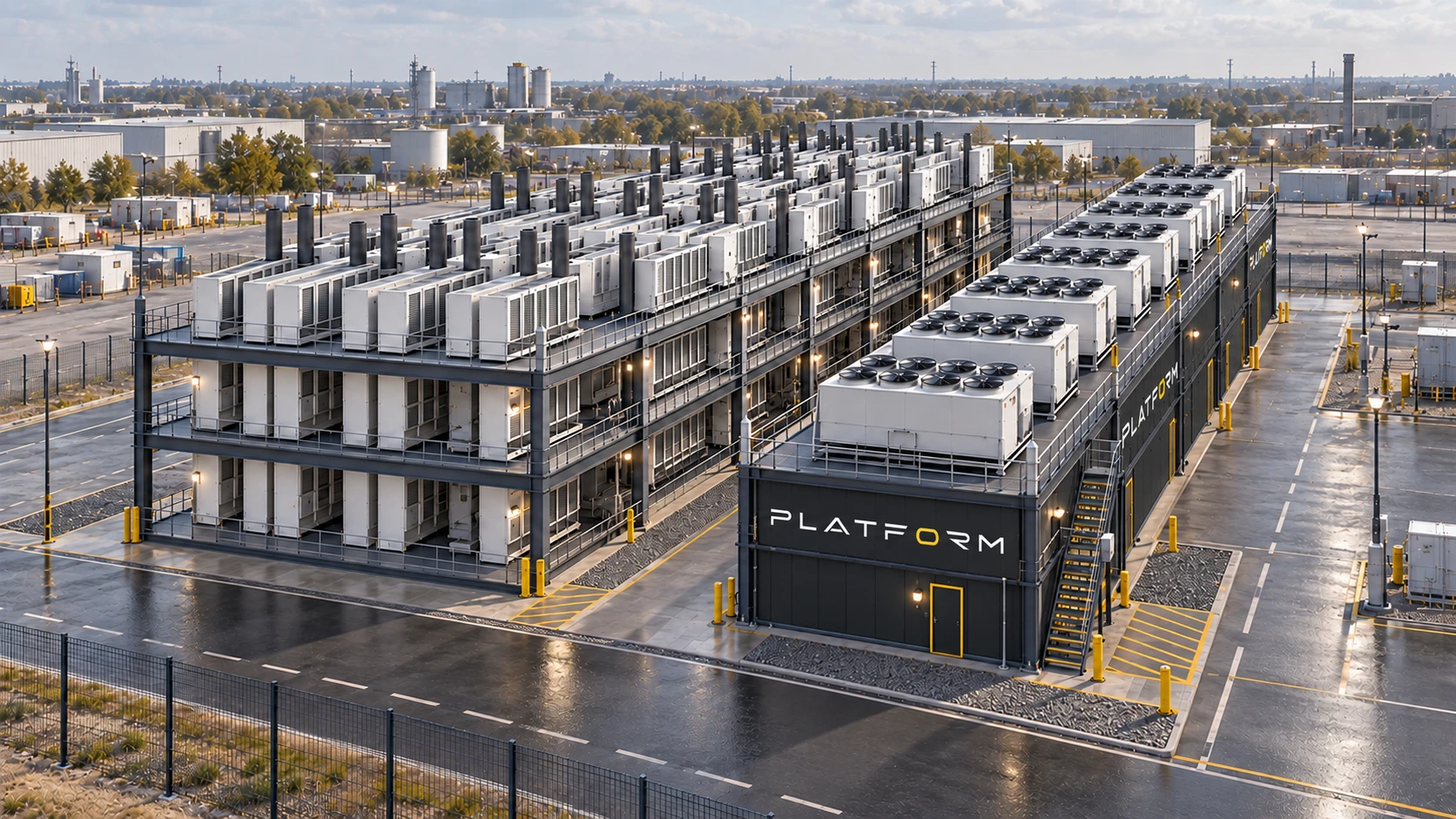
At Bank Quay, Platform is proposing a campus designed for AI computing on the former Unilever site. The aim is to create a new use for existing industrial land, supported by UK engineering, manufacturing and operational capability.
A development in progress. The proposals and measures described here remain subject to detailed design, assessment, planning and the agreed delivery programme.
REGENERATING INDUSTRIAL LAND
Bank Quay is part of Platform’s approach to bringing difficult former industrial land back into productive use. The cost and complexity of cleaning up brownfield sites can hold back redevelopment. Our model uses private investment to fund that work through the commercial project, without relying on taxpayers to meet the clean-up cost.
Modular data centres can provide a productive stage in the life of a site: supporting digital infrastructure, employment and local business while retaining flexibility for the future. On suitable sites, short-to-medium-term deployment can support a longer regeneration programme, with infrastructure designed for relocation or reconfiguration.
At Bank Quay, the duration and development of the campus will follow the agreed programme and customer commitments. Longer-term possibilities could include housing, employment space or other redevelopment that benefits the public. Any change would depend on local needs, planning approval, technical suitability and any further remediation required.
Our approach to regeneration and local valueTHE LOCAL OPPORTUNITY
The ambition goes beyond a new facility. It is to connect industrial regeneration with skills, local enterprise and lasting community value.
The proposal brings private investment into the former Unilever site, supporting site clean-up and a return to productive use as part of Warrington’s industrial regeneration.
The ambition is to support skilled work in engineering, manufacturing, installation, operations and maintenance. Recruitment and training opportunities will develop alongside the project; job numbers are not yet confirmed.
We aim to use local and regional suppliers wherever practical, with the safety, quality and capability the project needs. Our integrated approach creates opportunities across design, manufacture, build and ongoing support. Where applicable, we will offer favourable payment terms to local SMEs to support their cash flow and growth.
The Platform Social Value Fund is being developed around three priorities: local supply chains, hiring local people and regenerating surrounding communities. Potential improvements include playgrounds and shared community spaces, shaped by local needs and community input. Funding, governance and allocation arrangements are still being developed.
YOUR QUESTIONS, ANSWERED
Site clean-up, future land use, power, water, noise and construction are reasonable questions. These answers explain our proposed approach at Bank Quay and where further work is needed.
A data centre is a purpose-built facility that houses computer systems and related equipment. These systems process and store information used by businesses, researchers and digital services.
The proposed development is on the former Unilever industrial site adjacent to Warrington Bank Quay railway station in Warrington, Cheshire. The site is previously developed industrial land that has remained largely dormant for several years.
Platform is proposing a data centre campus designed to support AI computing. The proposal would bring a former industrial site back into productive use and create a new technology-focused development in Warrington.
The site is previously developed industrial land that is already associated with industrial activity. The proposal seeks to regenerate and repurpose this land for a new use.
Platform’s model funds site remediation through private commercial investment. The clean-up cost sits within the development project, without relying on taxpayers to pay for that work.
The work required will be established through site investigations and the remediation requirements for the approved use.
Modular infrastructure can give a site more flexibility over time. Where appropriate, a short-to-medium-term deployment can be one stage in a wider regeneration programme, with modules designed for relocation or reconfiguration.
For Bank Quay, any future change would need to respect customer commitments and the agreed development programme. Housing, employment space or other redevelopment that benefits the community would require a suitable proposal, planning approval and any further assessment or remediation needed for that use. These are future possibilities, not an approved redevelopment plan.
Residents, businesses and community organisations can submit comments to Warrington Borough Council during the planning consultation period. Details of how to comment are available through the council's planning portal.
Detailed information on the final campus layout, building dimensions and site design will be confirmed through the planning process. The published illustrations are conceptual and should not be regarded as the approved site layout.
The project aims to support skilled work in engineering, manufacturing, installation, operations and maintenance. Recruitment, training and apprenticeship opportunities are expected to develop alongside the project. Confirmed job numbers are not yet available.
The intention is to maximise opportunities for local recruitment, training, apprenticeships and supplier participation across Warrington and the wider North West as the project develops.
A data centre needs ongoing engineering, maintenance and operational support, as well as construction work. We will distinguish confirmed vacancies and programmes from longer-term ambitions. Local businesses and people interested in future opportunities can contact us below.
The project team intends to use local and regional suppliers wherever practical, while ensuring the required standards of safety, quality and capability are met.
Where applicable, we will offer favourable payment terms to local small and medium-sized enterprises (SMEs) to support their cash flow and growth. Payment schedules will be agreed clearly at the outset, reflecting the work and delivery requirements, with a commitment to paying in line with those terms.
Data centres require significant amounts of power. The exact electricity requirements for this proposal will depend on the final design, the development phase and agreements put in place during delivery.
Data centres need significant power. Our proposed strategy centres on generating electricity on site using fuel cells, intended to reduce additional demand on the local electricity network.
Existing grid connections remain part of the phased power and resilience arrangements. The precise grid requirement depends on the development stage and agreed conditions. On-site generation does not mean there is no grid connection or no wider energy impact.
Fuel cells generate electricity through an electrochemical process. They are being considered because they can operate efficiently and produce lower levels of some local air pollutants than some alternative technologies. When powered by natural gas, however, they still produce carbon dioxide.
No. Although the cooling system is designed to reuse coolant, some water use may still be required across the wider site. A closed-loop cooling system does not mean the entire development will be water-free.
Our cooling approach uses a closed loop: coolant circulates and is reused, with the aim of reducing fresh water demand. A closed loop does not mean the entire site uses no water.
Whole-site use also depends on how heat is released outside, initial filling, maintenance and staff facilities. Those requirements need to be assessed together before a reliable site-wide water figure can be shared.
The project team is exploring whether heat from the data centre and fuel cells could be used for beneficial local purposes rather than being released into the environment.
Heat reuse needs suitable nearby users, the right temperatures and a practical, viable connection route. It remains an opportunity under assessment.
No. The published illustration is a concept only. The final campus layout, environmental measures and delivery programme remain subject to ongoing assessments, planning decisions and infrastructure agreements.
No such claim is being made. While a future transition to low-carbon hydrogen is being explored, any environmental assessment must be based on the actual fuel used and the final site design. The proposal should not be regarded as a current zero-carbon development.
A future transition to low-carbon hydrogen is a pathway being explored, not a current zero-carbon claim. It depends on fuel supply, supporting infrastructure and equipment configuration. Environmental performance must be assessed for the actual fuel and whole-site design.
Like many industrial and infrastructure facilities, data centres can generate noise from cooling equipment, power generation systems and standby equipment. The development is not being described as silent.
The combined effects of cooling equipment, generation and standby systems need to be assessed, including at night and during testing.
The proposed approach includes careful equipment positioning, acoustic screening and detailed acoustic modelling. These measures will be designed to protect nearby residents and businesses.
Acoustic modelling needs to assess the combined site, with measures designed to protect neighbouring residents.
Construction activity will involve deliveries, vehicle movements and the potential for noise and dust. These impacts are separate from the operation of the completed facility and will need to be managed through the construction programme and planning process.
No. Modular and off-site manufacturing can reduce some construction activity, but site works, deliveries and installation activities will still be required.
Construction logistics, delivery routes, construction controls and working hours will be developed through the detailed planning and project delivery processes.
Specific working hours and delivery routes are not confirmed on this page.
Initial demolition works have already been completed as part of the site's redevelopment programme.
Platform owns an established modular manufacturing site in Warrington. Our Platform Modular capability brings manufacturing into the local delivery chain.
No commitment has been made. Heat reuse opportunities depend on suitable nearby users, achievable temperatures and practical connection routes. Any heat network remains under assessment and should not be assumed to result in lower household energy bills.
The Platform Social Value Fund is being developed around three priorities: local supply chains, hiring local people and regenerating surrounding communities. Potential improvements include playgrounds and shared community spaces, shaped by local needs and community input. Funding, governance and allocation arrangements are still being developed.
No. A planning application has been submitted to Warrington Borough Council. It will be considered through the planning process, including public consultation and technical assessment, before a decision is made.
Please refer to the council’s planning portal and application notices for the published consultation dates and latest status.
The proposal will continue through the planning process, including public consultation, technical assessments and consideration by Warrington Borough Council before any final decision is made.
Bank Quay is a development proposal on a former industrial site. Initial demolition works have been completed as part of the redevelopment programme.
The detailed campus design, environmental measures and phased delivery programme remain subject to the relevant assessments, planning, power delivery and agreements. The illustration on this page is a concept, not an approved site layout. Specific community funding arrangements are also still being developed.
FOR OUR NEIGHBOURS
If you live or work nearby, have a question about the proposal, or want to discuss local supply and employment opportunities, we would like to hear from you.
Ask about Bank QuayOr email contact@platformdc.io with “Bank Quay” in the subject. This is a direct route to Platform; it does not replace any formal planning consultation or representation to the council.